

Are you planning a trip to South Korea in 2026? One of the first things you’ll realize after landing at Incheon Airport is how incredibly efficient—yet slightly complex—the Korean public transport system can be for first-time visitors.
Looking for
Korean Favorites?
As an Amazon Associate, I earn from qualifying purchases.
From the iconic Seoul subways to the extensive bus networks in Busan and Jeju, knowing how to pay for public transport in Korea is the key to a stress-free journey. In this guide, we’ll break down the top 5 payment methods, including the latest 2026 updates on the Climate Card (Tourist Pass) and the roll-out of contactless credit card payments.
| Mode of Transport | Cash | T-money / WOWPASS | International Credit Card |
|---|---|---|---|
| Subway | ❌ (Single-use only) | ✅ (Recommended) | ⚠️ (Limited lines) |
| Bus | ❌ (Most are Cashless) | ✅ (Essential) | ⚠️ (In progress) |
| Taxi | ✅ | ✅ | ✅ (Very Easy) |
Pro Tip: Many Seoul buses no longer accept cash. Always have your transport card (Climate Card or T-money) ready before boarding!
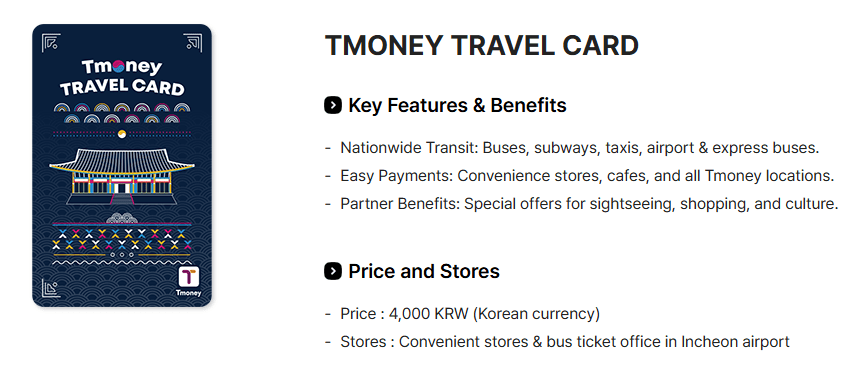
1. The “All-Rounder”: T-money Card
The T-money card remains the “Gold Standard” for traveling in Korea. It is a rechargeable prepaid card that works on almost every bus, subway, and taxi nationwide.
Why It’s Essential
- Nationwide Coverage: Unlike some city-specific passes, T-money works in Seoul, Busan, Jeju, and beyond.
- Transfer Discounts: You get free or heavily discounted transfers between subways and buses if you tap within 30 minutes.
- Micro-payments: You can use it to buy snacks at convenience stores like CU, GS25, and 7-Eleven.
How to Use & Top-up
You can buy the card (approx. ₩3,000–₩5,000) at any convenience store or subway station. Note: Most machines still require Cash (KRW) for top-ups, though 2026 has seen an increase in kiosks that accept foreign credit cards at major Seoul stations.
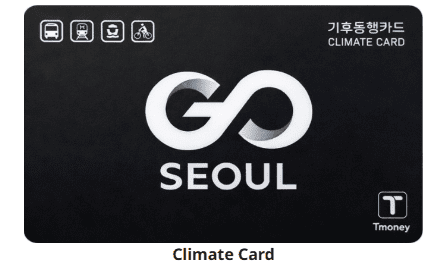
2. Best for Heavy Travelers: Climate Card (Tourist Pass)
If you are staying primarily in Seoul for a few days, the Climate Card (Gihu-Donghaeng Card) is a game-changer. Re-launched with specialized tourist tiers, it offers unlimited rides for a fixed price.
2026 Pricing for Tourists
| Pass Type | Price (KRW) | Best For |
|---|---|---|
| 1-Day Pass | ₩5,000 | Quick layovers / Intensive city tours |
| 3-Day Pass | ₩10,000 | Weekend trips (Most Popular) |
| 5-Day Pass | ₩15,000 | Mid-range stays |
| 7-Day Pass | ₩20,000 | Week-long explorations |
Key Benefits
- Unlimited Rides: Includes all Seoul subway lines and city buses.
- Airport Hack: As of 2026, the Climate Card can be used for the All-Stop Train to Incheon Airport (T1/T2).
- Eco-Friendly: By using this pass, you’re supporting Seoul’s carbon reduction initiative.
3. The Smart Choice: WOWPASS & NAMANE
For those who want to avoid carrying cash altogether, “All-in-one” cards like WOWPASS are the top recommendation for 2026.
WOWPASS: Currency Exchange + Debit + Transit
- Instant Exchange: Insert your home currency (USD, EUR, SGD, etc.) into a WOWPASS kiosk, and it spits out a card loaded with Korean Won.
- Two Balances: It has a “Debit” balance for shopping and a “T-money” balance for transit.
- Mobile App: Track your spending and remaining balance in real-time.
NAMANE Card: Personalized Souvenir
- You can print your own photo (like your favorite K-Pop idol or a travel memory) on the card, making it a functional souvenir.
4. The Future: Contactless (Open-Loop) Payments
In 2026, Korea is finally transitioning to an “Open-Loop” system, allowing you to use your overseas-issued Visa or Mastercard directly at the gates.
Current Status in 2026
- Seoul City Buses: Most now support “Tap to Pay” with EMV contactless cards (Visa/Mastercard).
- Subway (Lines 1-8): Major stations in Seoul have upgraded their turnstiles. However, regional lines and some private lines might still require a physical T-money card.
- Apple Pay / Google Pay: While acceptance is growing, it is still highly recommended to carry a physical backup card (like T-money or WOWPASS) as the roll-out is not 100% complete nationwide.
5. Quick Comparison: Which Card is Right for You?
| Feature | T-money | Climate Card | WOWPASS |
|---|---|---|---|
| Best For | General travel nationwide | Unlimited rides in Seoul | Cashless shopping + Transit |
| Cost | Pay-per-ride | Fixed price (Unlimited) | Pay-per-ride |
| Top-up | Cash only (mostly) | Cash / Foreign Card (Kiosk) | Foreign Currency / App |
| Area | Nationwide | Seoul Area Only | Nationwide |
My Professional Advice:
If you’re staying in Seoul for 3 days or more and plan to visit 3+ spots a day, get the Climate Card 3-day pass. If you’re traveling outside Seoul (e.g., to Busan), a WOWPASS is your best friend.
6. For Taxis
- Credit Cards: Most taxis in Seoul accept international VISA, Mastercard, and AMEX.
- Uber (UT): You can use your global Uber app in Seoul. It links directly to your registered card, so you don’t need to worry about the language barrier or payment.
Summary: 2026 has made traveling in Korea easier than ever. Whether you choose the unlimited freedom of the Climate Card or the convenience of WOWPASS, you no longer need to struggle with heaps of coins.
Have questions about your specific itinerary? Drop a comment below and I’ll help you pick the best card!
Check out our guide on the best Travel eSIMs for Korea 2026
❓ FAQ
Q1. Can I use Apple Pay for the Seoul Subway in 2026?
A. Partial support is available on major Seoul Metro lines, but many gates still require a physical EMV contactless card or a T-money card. Always carry a physical backup!
Q2. Where can I buy a Climate Card at Incheon Airport?
A. You can purchase the physical card at the convenience stores (CU, GS25) in the arrivals hall or at the Airport Railroad (AREX) information center.
Q3. Do I need to tap my card when getting off the bus?
A. Yes! Always tap your card when getting off to ensure you get the transfer discount and avoid being overcharged on your next ride.